

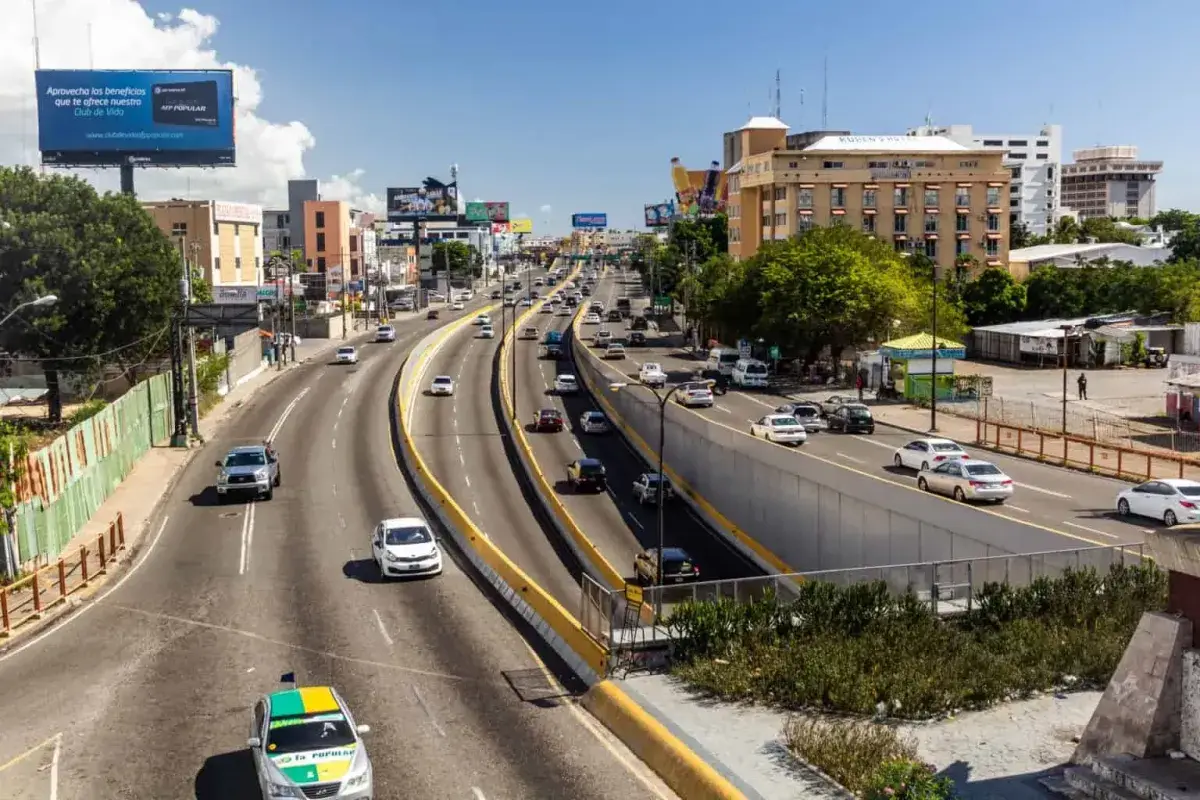

Traffic rules for driving in the Dominican Republic: a guide for safe driving
People ask me the same thing every week: is driving in the Dominican Republic actually safe for a visitor? My honest answer is yes, as long as you understand two things. The written rules here are close to what you already know from home, and the unwritten habits on the road are not. A driver who knows both can go from Punta Cana to Santo Domingo or out to the villages inland without a single scare. A driver who assumes everyone else will follow the sign is the one who gets a fright. This guide covers the actual Dominican Republic traffic rules, the numbers that matter, and the local behavior you need to read.
Which side of the road, and how overtaking works
Traffic keeps to the right and you overtake on the left, the same as in the United States, Canada and most of Europe. Cars are left-hand drive, so the wheel sits where you expect it. If you come from the UK, Japan or Australia, give yourself the first hour at low speed to let the habit settle, especially at roundabouts. Overtaking is where local style shows most. Drivers will pass on a two-lane road with less room than you might choose, and someone behind you will get impatient if you sit at the limit behind a slow truck. Do not let that pressure you. Pull to the right edge if the road allows, let them by, and pass only when you can see the whole gap. A flash of headlights from an oncoming car usually means "I am coming through", not "go ahead".
Dominican Republic speed limit: the numbers and the reality
The general Dominican Republic speed limit is 80 km/h on highways and 40 km/h in built-up areas. Those are the defaults, and they matter because a lot of stretches are not signed at all. When a section posts its own limit, that number wins, so watch the signs, particularly on the newer highways where limits change from one segment to the next and police with radar like to stand near the change. In towns 40 km/h feels slow until you see why it exists: unpainted speed bumps, pedestrians stepping off the curb, a bike pulling out of a side street. On the highways you will meet drivers going well over 80 and drivers doing 30 in the fast lane with the hazards on. Neither one is your problem to fix. Keep your own speed steady and leave a longer gap than you would at home. Before a long day on the road, check the current cost of gasoline; a steady cruise at the limit is also the cheapest way to cover distance here.
Seatbelts, alcohol and documents: what the law demands
Seatbelts are mandatory for the driver and every passenger. It is the law, not a suggestion, and it is the first thing an officer looks at when he waves you over at a checkpoint. The drink-driving limit is a blood alcohol level of 0.05% or lower, and it is enforced, especially around resort areas on weekend nights. Penalties include fines, arrest and losing your license. Two rum cocktails at a beach bar can put a smaller person over that line, so if you drink, someone else drives. Keep your documents in the car: your license, your passport or a copy of the photo page, and the rental contract with the insurance details. Checkpoints are routine on the roads out of the tourist zones. Slow down, lower the window, be polite, and in most cases you are waved on inside a minute. If you rent a car in Punta Cana, make sure the contract and insurance card are in the glovebox before you leave the lot.
Yielding, junctions and pedestrians
The give-way rules are simple on paper. You yield to pedestrians, to merging traffic, and at junctions and crossings. In practice many drivers treat a marked crossing as decoration, so if you stop for someone on foot, check your mirror first, because the car behind may not expect it. At unsigned junctions the bigger road has priority, but the real rule is eye contact and patience. At roundabouts, traffic already in the circle has the right of way, though someone will always nose in. A red light late at night in a quiet area gets treated as a stop sign by locals. You do not need to copy that. Stop, look both ways, and go when it is safe and legal. Stop signs at the exits of gas stations and side streets are often ignored by others, one more reason to hold your speed down in town.
Motorcycles and mopeds: the traffic that moves around you
Motorcycles and mopeds are everywhere, and they are the single biggest adjustment for a driver arriving from abroad. They weave through traffic, pass on the right, carry three people and a propane tank, and appear from behind a parked truck when you are halfway through a turn. Give them room. Before every lane change, every right turn and every door you open at the curb, check for a bike. Take extra care when overtaking, because a moped that was in your blind spot a second ago may already be alongside. They are bound by the same rules as you, so if one runs a stop sign and hits your car the law is on your side, but that is small comfort in the moment. Assume a motorcycle can occupy any gap wider than a handlebar and you will be right most of the time.
Night driving, sharp bends and rural roads
The last group of rules is about conditions rather than signs. Take extra care where lighting is poor, which is most secondary roads after dark and a good part of the main ones too. Streetlights are rare outside the towns, and you will meet vehicles with one headlight or none, cyclists with no reflectors, and pedestrians walking on the tarmac. Sharp bends in the hills often have no barrier and no warning sign, so slow before the curve, not in it. On rural roads, expect animals: cows, goats, horses and dogs wander onto the road and do not move for a horn. Potholes come without warning, and heavy rain hides their depth. For long distances the toll roads are worth every peso: better lit, fenced against animals, and patrolled. Keep the tank above half and plan the unfamiliar stretches for daylight. Do that, belt up, watch for bikes and respect the posted limit, and driving in the Dominican Republic becomes what it should be: the easiest way to see a country far bigger than the beach in front of your hotel.