

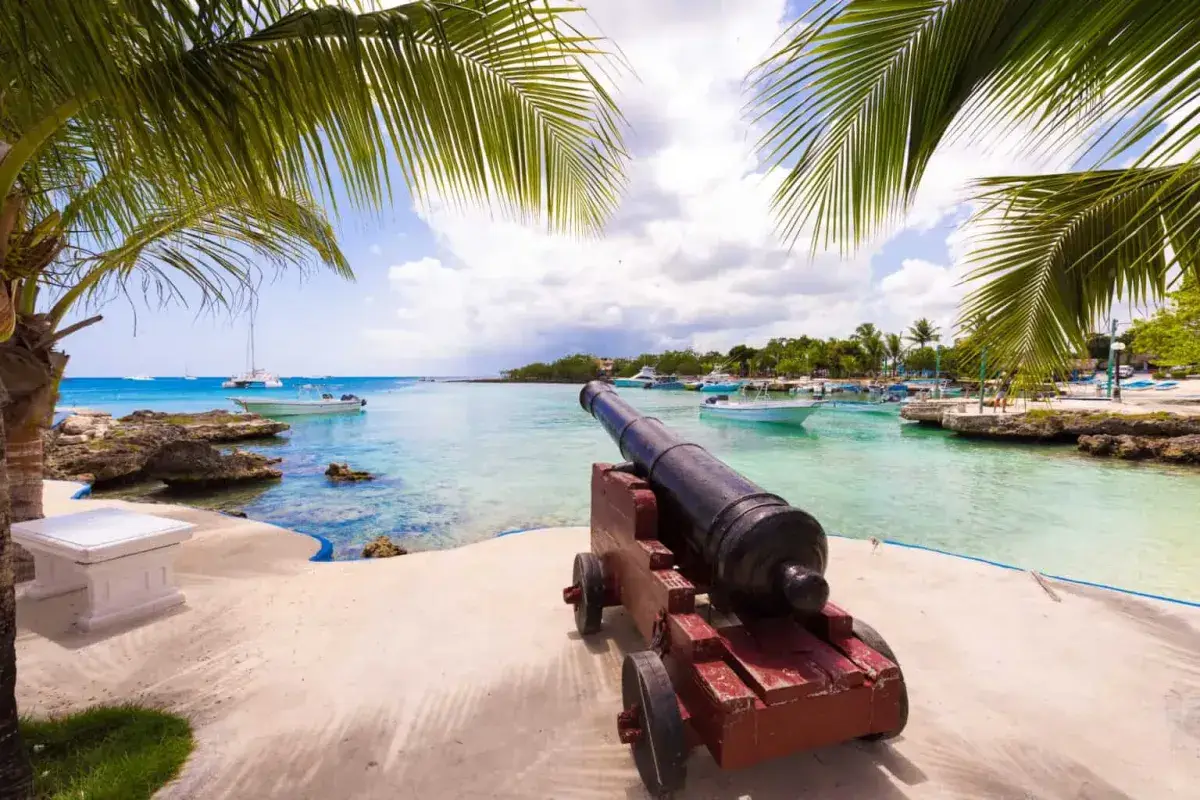

Bayahibe and the boats to Saona Island
Most people who visit Bayahibe never really see it. They get loaded onto a tour bus at a Punta Cana resort before sunrise, sleep through the drive, get walked straight from the parking lot to a catamaran, and come home with a sunburn and a vague memory of palm trees. That is a shame, because Bayahibe, Dominican Republic is one of the nicest small towns on this coast, and it sits about an hour from Punta Cana by car. With your own rental you leave when you want, park by the water, have a coffee near the fishermen, and still make an early boat to Saona Island. This is how I would do it if you were staying at my place.
The drive from Punta Cana to Bayahibe
Take the Autopista del Coral west out of Punta Cana. It is a modern toll highway, well signed, and the drive is mostly green countryside, sugar cane, and the occasional cow standing in the shade. Keep some pesos in the console for the toll booths. The turnoff for Bayahibe and Dominicus is marked before you reach La Romana; you drop south off the highway and follow a two-lane road through scrub and small farms until the sea appears. Budget about an hour, a little more if you leave during the morning rush around Punta Cana. The road is fine for any small car. If you have not booked yet, you can rent a car in Punta Cana and the price will show when you pick your dates. Compare that with what the resort desk charges per person for a Saona excursion, multiply by everyone in your group, and you will see why locals shake their heads at the tour markup.
What Bayahibe village actually feels like
Bayahibe is a fishing village first and a tourist stop second, and it still behaves like one. The center is a handful of streets around a small bay. There are wooden boats pulled up on the sand, men mending nets, kids on bicycles, colmados playing bachata a bit too loud, and a small church that faces the water. It is Dominican life at normal volume. Layered on top of that is a large Italian community that settled here decades ago and opened dive shops, small hotels, and restaurants. So you will hear Italian on the street as often as English, and you can get a proper espresso next to a shack selling fried fish. Walk the whole village in twenty minutes, then sit somewhere with a view of the boats. That is the point of coming early.
Playa Dominicus and the town beach
There are two beaches to know. The town beach in Bayahibe itself is small, sheltered, and busy with boats in the morning. It is where the Saona trips leave from, so it feels more like a working harbor than a place to spend the day, though the water is calm and clear and people swim there happily once the boats have gone. Playa Dominicus is a ten-minute drive south along the coast. It is a long stretch of white sand with calm water, shallow for a long way out, and it holds Blue Flag certification for cleanliness and safety. The big resorts back onto it, but the beach is public and there is an entrance for day visitors near the end of the road. Bring your own shade or rent a chair. If you are ranking coastlines, it belongs on any honest list of the best beaches in Punta Cana and the wider east coast, even though it technically sits in La Romana province.
Catching a Saona Island boat on your own schedule
Saona Island is the reason the parking lot fills up. It is a low, palm-covered island at the southeastern tip of the country, inside Parque Nacional del Este, which you will also see written as Parque Nacional Cotubanamá. The classic day goes like this: a catamaran or a speedboat out from Bayahibe, a stop at the piscina natural (a shallow sandbar well offshore where you stand waist-deep in clear water while starfish sit on the bottom), then a couple of hours on a Saona beach with a lunch of rice, chicken, and fish cooked on the sand, then the ride home. Catamarans are slower and more social, with music and drinks. Speedboats get you there faster and give you more beach time. Here is where driving yourself pays off. The tour buses from Punta Cana arrive in a wave around mid-morning. If you park in Bayahibe early, you can talk directly to the boat operators on the waterfront, pick a smaller boat, and be on the water before the crowd. The local operators sell the same trip the resorts sell, minus the bus and minus the commission. Bring cash, sunscreen, water shoes, and a dry bag for your phone.
Isla Catalina, diving, and the rest of the park
Saona gets the fame, but Isla Catalina is the better call if you care about what is under the water. It is a smaller island closer to La Romana with a steep reef wall on one side and calm, sandy shallows on the other. Dive shops in Bayahibe run trips there most days, and snorkelers can join the same boats. Bayahibe itself has been a diving base for years: there are wrecks sunk on purpose for divers, coral gardens a short ride from the harbor, and freshwater caves inland for people with the right certification. Parque Nacional del Este covers a big stretch of dry forest, mangroves, and coastline. Along the road toward the park entrance you can walk short trails, see caves with Taino pictographs, and watch for birds you will not see near the resorts. Most day visitors skip all of this. With a car it takes an extra hour, and it is the part of the trip people end up talking about later.
Eating well and making a full day of it
Come back to the village hungry. The seafood in Bayahibe is fresh in the literal sense: the boat that caught your fish is probably tied up within sight of your table. Order pescado frito with tostones, or lambi if it is in season, and a cold Presidente. The Italian places do good pasta and thin-crust pizza and are often full of long-term residents, which tells you something. Prices in the village are lower than anything inside a resort. If you still have energy, the way home passes the turnoff to Altos de Chavón, the stone artists' village above the Chavón river, which is a good place to catch the late light before you get back on the highway. Or just drive home slowly with the windows down. That is the version of Bayahibe that stays with you: not the excursion, but the day you built yourself.