

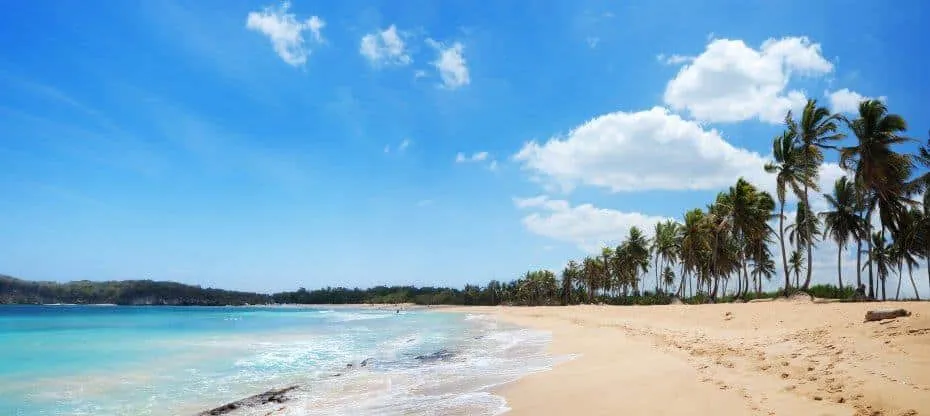

About 30 kilometres north of the Bavaro hotel strip the fences run out. The road turns inland, the resort walls drop away, and you roll out at a bay of pale sand with fishing boats hauled up under a cliff. That is Playa Macao, in La Altagracia province, sitting between Arena Gorda to the south and Uvero Alto to the north. Every beach in the Dominican Republic is legally public under Law 305 of 1968, which reserves the first 60 metres from the high tide line, but along this coast the land behind the sand is mostly resort property behind a fence. Macao breaks that pattern. One hotel sits on it (Dreams Macao, opened in 2020) and the rest belongs to food shacks, surf huts, a village of colmados and comedores, and whoever drives in.
This is also the beach the buggy tours use, and the one with the worst reputation for currents in the whole Punta Cana area. The tour trucks and buggies land in a wave from mid morning, and the ocean here has killed people who assumed they were on a resort beach. Arrive early, stay late, pick your patch of water with care, and it stands among the best beaches around Punta Cana by a wide margin.
The road, the fuel and why you want your own car
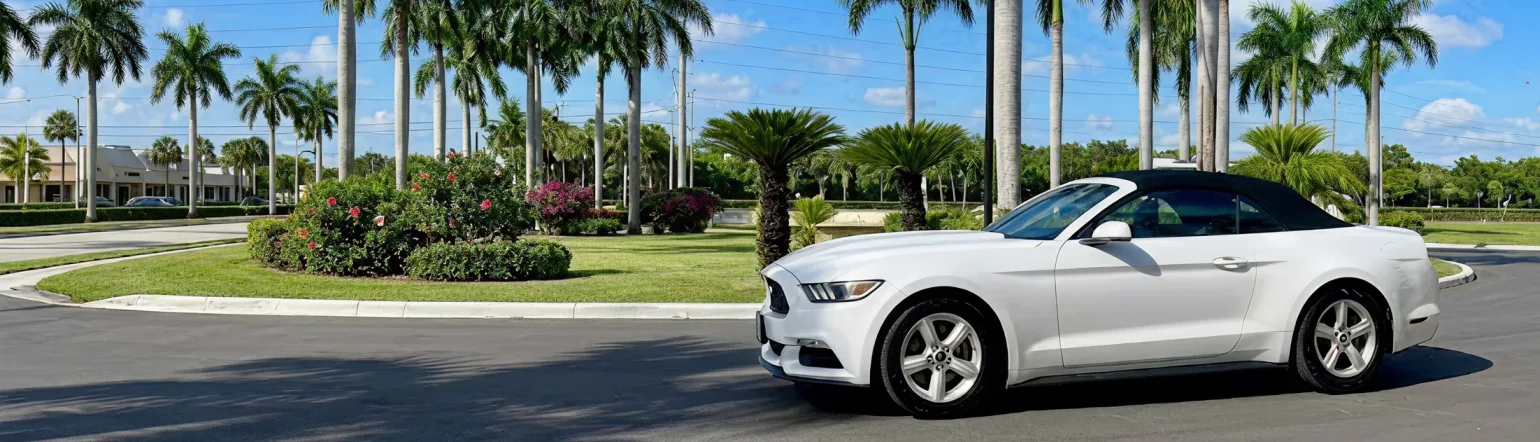
From anywhere in Bavaro you take Boulevard Turistico del Este north and follow the signs for Macao. Past the RIU complex at the Macao crossroad the traffic thins to almost nothing. Reckon on 30 to 35 minutes from the middle of Bavaro, or 35 to 40 from the airport. The main road is paved and flat. The last kilometre down to the beach is where the potholes live, but a normal sedan handles it in dry weather, and a compact SUV is mainly a comfort choice for the rainy months when the access road holds puddles. A 4x4 is not required. Fill up before you leave the resort zone, or at the Texaco about three kilometres south of the beach; stations are full service, the attendant pumps, cash moves faster than card, and 25 to 50 pesos is the normal tip. Do not plan to drive back after dark. The highway to Macao has no street lighting, the speed bumps are unpainted, and motoconchos ride it with no lights at all, so local rental agencies tell customers to be home before the sun goes at about 6:30 in the evening. That is most of the argument for renting. A taxi from the Bavaro resorts runs roughly 25 to 35 dollars each way (2025 and 2026 figures), there is no public bus from the resort area to the beach, and a buggy tour gives you somewhere between 20 and 45 minutes on the sand before the guide waves everyone back. With a car picked up in Punta Cana you can be parked by eight, eat lunch when the fish comes in, and leave when the light does.
Swimmer, surfer, photographer: three different beaches
From the parking lot the bay reads as one beach. In the water it is three. The centre drops off fast, the shore break lands hard, and the undertow is strong enough to pull people 25 metres out in seconds. On March 1, 2015 four tourists drowned here after one got into trouble and the others went in after her. Four more died in January 2025 at Arena Gorda, the very next beach south, in the same kind of surf. There are no lifeguards you can count on, and nobody flies flags. If you came to swim, walk to the end where the cliff meets the water and the fishermen leave their lanchas. The rock takes the force out of the swell, the bottom stays waist deep a long way out, and children can stand. The summer months are calmer across the whole bay; from December through the winter the swell picks up and even the sheltered corner needs watching.
Surfers head to the other flank, where sandbars hold a wave most days of the year. Two schools work from huts on the sand. Macao Surf Camp lists group lessons from 100 dollars and private from 125, two hours in the water after a short talk on the beach, with pickup from hotels and apartments anywhere in Punta Cana built into the price. Punta Cana Surf Adventure starts at 70 dollars, teaches in English, Russian and Spanish, and rents boards from 15 dollars an hour. One reviewer who took the hotel transfer clocked the whole outing at two and a half to three hours door to door, which is the number to plan around if you are not driving yourself. Beginners get foam boards and a sandy bottom with no rock in the break, which is why first timers stand up here on day one.
Photographers have the simplest brief and the earliest alarm. The fishermen come back around sunrise and pull the boats up at the cliff end; that is the picture. By half past ten the buggy convoys arrive on the dirt trails behind the parking lot and the beach fills with helmets and dust for a few hours, so wait them out. Weekdays are quieter, Sunday is the local family day and the loudest of the week. In summer the sun sets far enough north that you can watch it drop from the sand, and ten minutes on foot past the rocks there is a smaller cove, Playa Escondida, that most tour groups never see.
What is not there
Macao is not a resort beach with the hotel taken away. It is a village beach that tourists found. Plan for the following gaps, because nobody at the beach will fill them for you.
- No lifeguard on duty. The surf instructors have rescue training and have pulled people out, but they are busy with their own students.
- No shade beyond the palms at the back and the umbrellas you rent. At midday the open sand is brutal.
- No card machines. Bring pesos in small notes for food, chairs, the restroom and the parking man.
- No reliable toilet paper, soap or running water in the public restrooms.
- No street lighting on the road home, and no fuel closer than the Texaco three kilometres back toward Bavaro.
- No sand driving. Buggies and ATVs stop at the parking area on dirt trails; the beach itself stays for feet and boats.
Pack sunscreen, a hat, a dry bag for the phone, water for the drive and a change of clothes for the car seats. Then leave the resort earlier than feels reasonable and hand back the keys with sand in the footwells. That is the whole method.